


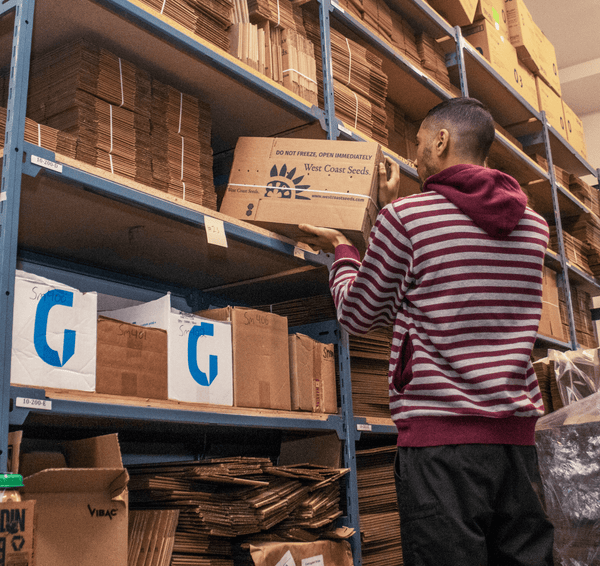
West Coast Seeds ships anywhere in North America. However, we are not able to ship garlic, potatoes, asparagus crowns, bulbs, onion sets, Mason bee cocoons, or nematodes outside of Canada.
Exposure Full-sun
Matures in 135 days
Season Cool season
Seed type OP ?
Average Seeds Per Gram 358 ?
West Coast Seeds ships anywhere in North America. However, we are not able to ship garlic, potatoes, asparagus crowns, bulbs, onion sets, Mason bee cocoons, or nematodes outside of Canada.
For every order online, we donate a pack of seeds to gardens and communities worldwide through our Seeds of Growth program, supporting sustainable growth and local food systems.
Sow Bandit leek seeds March to mid-June for fall and winter harvests. Bandit is extremely cold hardy and upright in habit. It develops substantial, thickened stems and attractive, very dark blue-green leaves. The mammoth stems add a little bit of weight for market growers, and can be blanched higher on the plants by hilling. The thickened stems also make cleaning easier. Bandit shows very little bulbing, bolting, or splitting so it can be harvested into the following spring. The flavour is excellent and the sweetness improves with frost and cold weather.
These seeds may be coated with an inert, organically certified layer which helps to minimize clumping in storage and seed sowing machines. The coating is approved by organic certifiers in Canada, the US, EU, and Japan.
Matures in 135 days. (Open-pollinated seeds)
We'll notify you when this product is back in stock.
Latin
Latin
Allium ampeloprasum var. porrum
Family: Amaryllidaceae
Difficulty
Difficulty
Easy, but slow. Transplanting is required.
Season & Zone
Season & Zone
Season: Cool season
Exposure: Full-sun
Zone: Winter harvest leeks are hardy to Zone 7.
Timing
Timing
Start summer/fall harvest leeks 6-8 weeks before the last frost date, in flats indoors. Start winter harvest leeks indoors from March to mid-June. In mild winter areas, start them in a humus-rich nursery bed outside, and then transplant. Optimal soil temperature: 10-25°C (50-75°F). Seeds should sprout in 10-16 days.
Starting
Starting
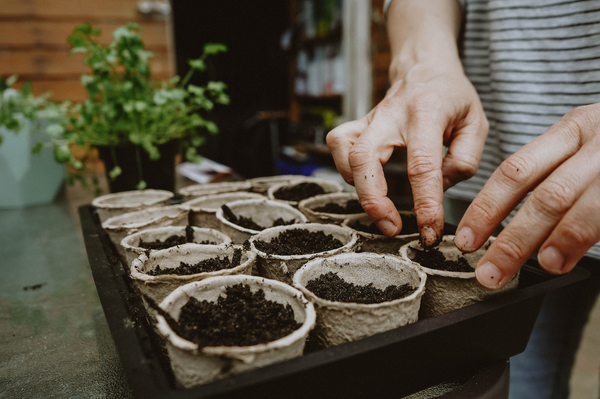
In flats: Sow seeds 5mm (¼”) deep, about 1cm (½”) apart. Transplant when 20cm (8″) tall. Space 20cm (8″) apart in rows 45cm (18″) apart. Rows can be as narrow as 20cm (8") if planting in raised beds or other situation where weeding will be simple.
Growing
Growing
Ideal pH: 5.-6.5. Leeks have short roots, so the benefit from fertile soil with lots of compost and ½ cup balanced organic fertilizer worked in beneath each 2m (6′) of row. Traditional garden wisdom recommends using a dibber to make holes 15cm (6″) deep. Transplants are then set at the bottom of the hole and the hole is left unfilled – rain will fill it in as the leek grows. To blanch further up the stem, hill soil up around the stem as the leek grows, or mulch with straw.
However, the wise and much loved garden writer Linda Gilkeson asserts that there is no need to plant leeks into holes or trenches. She recommends transplanting the seedlings only at the depth of the soil plug they grow in. They will still produce nice, tall, blanched shanks, with no soil grains between the leaves.
In late fall, mulch around leeks as high up the stems as possible. If the forecast is for weather below -10° (14°Ï‚ cover them with a blanket or tarp.
Days to maturity: From transplant date.
Harvest
Harvest
Dig at any size, as needed. If winter harvest leeks freeze solid, wait until they thaw out during a warm spell to harvest.
Seed Info
Seed Info
In optimal conditions at least 65% of seeds will germinate. Usual seed life: 1 year. Per 100′ row: 240 seeds, per acre: 70M seeds.
Companion Planting
Companion Planting
Grow leeks with beets, carrot, celery, onions, and spinach. Avoid planting near beans and peas. Leeks help repel carrot rust flies.
More on Companion Planting.
West Coast Seeds is a family-owned company that embraces an organic lifestyle. A group of imagination catalysts and passionate educators, dedicated to producing products and services that better the environment. As part of our mission to repair the earth, we aim to inspire and empower people to take responsibility for the state of the planet. For us, organic is about much more than saying no to chemicals, it is about saying yes to building a healthy soil for the future.
For over 35 years, we have upheld our strong reputation as a leading seed supplier, seeking out the highest quality untreated seeds for organic growing and putting them through rigorous independent testing. We built our company on the exchange of generational wisdom in a masterclass community of newbies and masters alike. Our world may have changed, but our commitment to our people, our customers, and our planet has not.
We’re a values-based business that has blossomed into a lifestyle ethos, with products that support seeders, feeders, keepers, and the tiniest of creepers. Our mission? To mobilize the next generation of gardeners with products that nourish soil and grow vigorous, sustainable gardens. We believe all plants should be grown without the use of chemicals, and that the seeds we supply are an important component of regenerative gardening.
We don’t just offer seeds, we offer experience, insight, and understanding. From timeless garden wisdom to new tech know-how, this is learning on the job: knowledge gleaned not from the pages of a book but from burying our fingers in the soil. We test, experiment, observe and adapt, never happier than when we get to share what we’ve learned with others.
Gardens don’t just grow seeds. They grow minds and imaginations, people and communities. Our vision encompasses both the micro and the macro. We eat locally, protect pollinators, teach people to grow from seed, and support regional biodiversity. We think big but act small and deliver unexpected impact — always with community and purpose.
At West Coast Seeds we believe in the power of small and that little can be large. Like the tiniest seed germinates to evoke incremental change with massive potential, so to can our community of gardeners and growers together. Gardeners are the earth’s stewards, planting seeds of creative declaration. The soil provides the canvas, we provide the seeds.
Start summer/fall harvest leeks 6-8 weeks before the last frost date, in flats indoors. Start winter harvest leeks indoors from March to mid-June. In mild winter areas, start them in a humus-rich nursery bed outside, and then transplant. Optimal soil temperature: 10-25°C (50-75°F). Seeds should sprout in 10-16 days.
In flats: Sow seeds 5mm (¼”) deep, about 1cm (½”) apart. Transplant when 20cm (8″) tall. Space 20cm (8″) apart in rows 45cm (18″) apart. Rows can be as narrow as 20cm (8") if planting in raised beds or other situation where weeding will be simple.
Ideal pH: 5.-6.5.
Leeks have short roots, so the benefit from fertile soil with lots of compost and ½ cup balanced organic fertilizer worked in beneath each 2m (6′) of row. Traditional garden wisdom recommends using a dibber to make holes 15cm (6″) deep. Transplants are then set at the bottom of the hole and the hole is left unfilled – rain will fill it in as the leek grows. To blanch further up the stem, hill soil up around the stem as the leek grows, or mulch with straw.
However, the wise and much loved garden writer Linda Gilkeson asserts that there is no need to plant leeks into holes or trenches. She recommends transplanting the seedlings only at the depth of the soil plug they grow in. They will still produce nice, tall, blanched shanks, with no soil grains between the leaves.
In late fall, mulch around leeks as high up the stems as possible. If the forecast is for weather below -10°‚ cover them with a blanket or tarp.
Days to maturity: From transplant date.
In optimal conditions at least 65% of seeds will germinate. Usual seed life: 1 year. Per 100′ row: 240 seeds, per acre: 70M seeds.
Dig at any size, as needed. If winter harvest leeks freeze solid, wait until they thaw out during a warm spell to harvest.