












West Coast Seeds ships anywhere in North America. However, we are not able to ship garlic, potatoes, asparagus crowns, bulbs, onion sets, Mason bee cocoons, or nematodes outside of Canada.




Excellent germination rates and uniformity.



Exposure Full Sun
Matures in 115 days
Season Cool Season
Seed type F1, Organic ?
Average Seeds Per Gram 225 ?
West Coast Seeds ships anywhere in North America. However, we are not able to ship garlic, potatoes, asparagus crowns, bulbs, onion sets, Mason bee cocoons, or nematodes outside of Canada.
For every order online, we donate a pack of seeds to gardens and communities worldwide through our Seeds of Growth program, supporting sustainable growth and local food systems.
A medium-late, high yielding variety with vigorous growth to around 80cm (32") tall. The sprouts are dark green, firm, smooth, and uniform from top to bottom on the stem. Igor stands up really well against frost, so the harvest period is extended from November to the end of January from May or June plantings. Avoid transplanting Brussels sprouts into high nitrogen soils in order to avoid loose sprouts. A balanced, fertile soil will ensure nice tightly packed sprouts that will have increased sugar content after frost, so the flavour really improves. Winner of the RHS Award of Garden Merit.
We'll notify you when this product is back in stock.
Latin
Latin
Brassica oleracea var. gemmifera
Family: Brassicaceae
Season & Zone
Season & Zone
Season: Cool season
Exposure: Full-sun
Timing
Timing
The goal is to harvest mature sprouts after they have been kissed by frost. Seeds can be direct sown any time once the daytime temperature is steadily above 10°C (50°F). Otherwise start the seeds in small pots or transplant beds and transplant into the garden so the plants are in the ground for 45-60 days before the first hard frost. Optimal soil temperature for germination: 10-30°C (50-85°F). Seeds should germinate in 7-10 days.
Starting
Starting
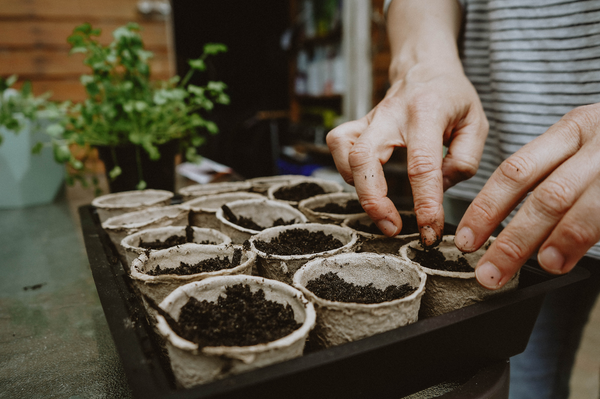
Sow 3-4 seeds per pot, 1cm (1/2”) deep, under very bright light. Thin to the strongest plant. Transplants should be set out when they have 6-8 true leaves. Space transplants 45-60cm (18-24″) apart in rows 75-90cm (30-36″) apart.
Growing
Growing
Ideal pH: 6.0-7.5. Plant in humus-rich soil amended with composted manure. Mix ¼ cup complete organic fertilizer into the soil under each transplant. High nitrogen levels result in loose sprouts with internal browning, so do not fertilize after midsummer. Cool temperatures during sprout development are important for compact, quality sprouts.
Days to Maturity
Days to Maturity
From transplant date.
Harvest
Harvest
Sprouts are sweeter after moderate freezes. Pick when sprouts are firm and well-formed, beginning with the ones at the bottom. The upper sprouts continue to form and enlarge as the bottom ones are harvested. For a once over harvest, to ensure you have enough for your holiday meal, pinch out the growing point at the top of the stem when the lower sprouts are 1-2 cm (½-¾”) in diameter. A full stem of evenly sized sprouts will develop in about 2 weeks.
After harvesting the sprouts, there may be another harvest in early spring where winters are mild. The plant sends up long, edible flower stalks which are tender and sweet when steamed, or served raw with a dip.
Seed Info
Seed Info
In optimum conditions at least 80% of seeds will sprout. Usual seed life: 3 years. Per 100′ row: 170 seeds, per acre: 30M seeds.
Diseases & Pests
Diseases & Pests
Slugs and snails – Slugs are attracted to beer, so place a little beer in a cup dug into the ground. Sprinkle broken eggshells around plants to deter slugs and snails.
Cabbage aphids – A hard stream of water can be used to remove aphids from plants. Wash off with water as needed early in the day. Check for evidence of natural enemies such as grey-brown or bloated parasitized aphids and the presence of larvae of lady beetles and lacewings.
Cabbage root maggot – White maggot larvae feed on roots of plants. Damage causes wilting early on, and the death of plants later on.
Flea Beetles – Use row covers to help protect plants from early damage. Put in place at planting and remove before temperatures get too hot in midsummer. Control weeds. Nematodes feed on the larvae of these pests.
Cutworms – Control weeds. Cardboard collars around each plant give good protection.
Cabbageworms – Hand-pick and destroy. Row covers may be useful on small plantings to help protect plants from early damage. Put in place at planting and remove before temperatures get too hot in midsummer.
Clubroot: If soil is infested, add lime to raise pH of soil to 7.2. Locate plants in a part of the garden different from previous year’s location. If that is not possible, remove infested soil and replace with fresh soil. Start seeds in sterile potting mix or fresh ground. Remove and discard or destroy infested plants along with the surrounding soil and soil clinging to roots.
West Coast Seeds is a family-owned company that embraces an organic lifestyle. A group of imagination catalysts and passionate educators, dedicated to producing products and services that better the environment. As part of our mission to repair the earth, we aim to inspire and empower people to take responsibility for the state of the planet. For us, organic is about much more than saying no to chemicals, it is about saying yes to building a healthy soil for the future.
For over 35 years, we have upheld our strong reputation as a leading seed supplier, seeking out the highest quality untreated seeds for organic growing and putting them through rigorous independent testing. We built our company on the exchange of generational wisdom in a masterclass community of newbies and masters alike. Our world may have changed, but our commitment to our people, our customers, and our planet has not.
We’re a values-based business that has blossomed into a lifestyle ethos, with products that support seeders, feeders, keepers, and the tiniest of creepers. Our mission? To mobilize the next generation of gardeners with products that nourish soil and grow vigorous, sustainable gardens. We believe all plants should be grown without the use of chemicals, and that the seeds we supply are an important component of regenerative gardening.
We don’t just offer seeds, we offer experience, insight, and understanding. From timeless garden wisdom to new tech know-how, this is learning on the job: knowledge gleaned not from the pages of a book but from burying our fingers in the soil. We test, experiment, observe and adapt, never happier than when we get to share what we’ve learned with others.
Gardens don’t just grow seeds. They grow minds and imaginations, people and communities. Our vision encompasses both the micro and the macro. We eat locally, protect pollinators, teach people to grow from seed, and support regional biodiversity. We think big but act small and deliver unexpected impact — always with community and purpose.
At West Coast Seeds we believe in the power of small and that little can be large. Like the tiniest seed germinates to evoke incremental change with massive potential, so to can our community of gardeners and growers together. Gardeners are the earth’s stewards, planting seeds of creative declaration. The soil provides the canvas, we provide the seeds.
The goal is to harvest mature sprouts after they have been kissed by frost. Seeds can be directly sown any time once the daytime temperature is steadily above 10°C (50°F). Otherwise, start the seeds in small pots or transplant beds and transplant into the garden so the plants are in the ground for 45-60 days before the first hard frost.
Optimal soil temperature for germination: 10-30°C (50-85°F). Seeds should germinate in 7-10 days.
Sow 3-4 seeds per pot, 1cm (1/2”) deep, under very bright light. Thin to the strongest plant. Transplants should be set out when they have 6-8 true leaves. Space transplants 45-60cm (18-24″) apart in rows 75-90cm (30-36″) apart.
Ideal pH: 6.0-7.5.
Plant in humus-rich soil amended with composted manure. Mix ¼ cup complete organic fertilizer into the soil under each transplant. High nitrogen levels result in loose sprouts with internal browning, so do not fertilize after midsummer. Cool temperatures during sprout development are important for compact, quality sprouts.
Days to maturity: From transplant date.
In optimum conditions at least 80% of seeds will sprout. Usual seed life: 3 years. Per 100′ row: 170 seeds, per acre: 30M seeds.
Sprouts are sweeter after moderate freezes. Pick when sprouts are firm and well-formed, beginning with the ones at the bottom. The upper sprouts continue to form and enlarge as the bottom ones are harvested. For a once-over harvest, to ensure you have enough for your holiday meal, pinch out the growing point at the top of the stem when the lower sprouts are 1-2 cm (½-¾”) in diameter. A full stem of evenly sized sprouts will develop in about 2 weeks.
After harvesting the sprouts, there may be another harvest in early spring where winters are mild. The plant sends up long, edible flower stalks which are tender and sweet when steamed, or served raw with a dip.
Flea Beetles – Use row covers to help protect plants from early damage. Put in place at planting and remove before temperatures get too hot in midsummer. Control weeds. Nematodes feed on the larvae of these pests.
Cutworms – Control weeds. Cardboard collars around each plant give good protection.
Cabbageworms – Hand-pick and destroy. Row covers may be useful on small plantings to help protect plants from early damage.
Clubroot: If soil is infested, add lime to raise pH of soil to 7.2. Locate plants in a part of the garden different from previous year’s location. If that is not possible, remove infested soil and replace with fresh soil. Start seeds in sterile potting mix or fresh ground. Remove and discard or destroy infested plants along with the surrounding soil and soil clinging to roots.