

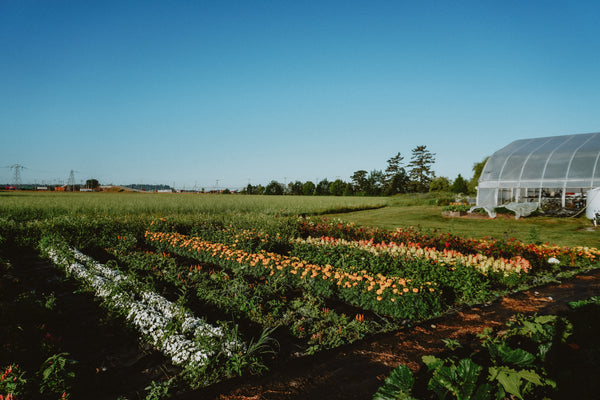










My wildflower lawn has turned my house into the talk of the town. What was once a drab, uneven, and neglected lawn has turned into an urban meadow that is not only stunning but also incredibly low maintenance and eco-friendly.
When I first considered removing my lawn, I thought about what would actually thrive in the space. I decided on a wildflower lawn alternative seed blend from a well-respected local seed company, knowing it would have the best chance in our climate. What I loved about the blend was how it promised waves of color throughout the season: early bloomers giving way to midsummer flowers, then late-season blooms, with annuals, biennials, and perennials all mixed together.

Because I was working with existing lawn, I didn’t bother removing all the grass. The fescues in my seed mix would complement whatever stayed. I spread 3 inches (8 cm) of topsoil mix over everything, then tried something unconventional with the seeding. Instead of following the packet timing exactly, I sowed three times: a few weeks early, on schedule, and a few weeks late. This gave me better coverage and filled in gaps naturally.
What resulted was the most stunning and low-maintenance front yard I could imagine. Because each time I sowed the seeds before it rained, I watered zero times. I then built a dry river through the lawn as a pathway and, as a result, I mowed zero times. Drought tolerant, no mow, beautiful, and regenerative: after you try a wildflower lawn, you will never go back.

MATERIALS
There are only two materials you need for this project: seeds and soil. You may have the soil prepared already, but in this project I topped my existing turf grass with lawn soil mix (20 percent sand mixed into compost) and a wildflower seed blend from a local supplier.
My blend was the Wildflower Alternative Lawn Mix from West Coast Seeds containing:
• Baby blue eyes (Nemophila menziesii)
• California poppy (Eschscholzia californica)
• Creeping daisy (Chrysanthemum paludosum)
• Dwarf California poppy (Eschscholzia caespitosa)
• Five spot (Nemophila maculata)
• Hard fescue (Festuca trachyphylla)
• Johnny jump-up (Viola cornuta)
• Sheep fescue (Festuca ovina)
• Sweet alyssum (Lobularia maritima)
• White Dutch clover (Trifolium repens)
• Wild thyme (Thymus pulegioides)
• Yellow daisy (Chrysanthemum multicaule)

SELECTING AND PREPARING
Select a seed blend suited to your growing conditions and desired plant mix. Herb, perennial, butterfly, shade, and drought-tolerant blends are widely available; look for those identified as lawn alternative. Local suppliers offer seeds adapted to your climate, improving success rates. Quality blends provide succession blooming throughout the season, with early flowers transitioning to midseason and late bloomers through a mix of annuals, biennials, and perennials.
If converting lawn, you can leave existing grass in place, especially if your blend includes complementary grasses like fescue. Prepare the area by weeding, then spread 3 inches (8 cm) of lawn topsoil mix evenly across the surface. Rake the soil level before sowing.
SOWING
-
Order 15 to 20 percent more seeds than the area requires to fill patchy areas after germination.
-
Sow seeds three times rather than once: several weeks before the recommended date, on the recommended date, and several weeks after. This extends germination periods and improves coverage.
-
For the first sowing, use a straight rake to work seeds into the top 1 to 2 inches (2.5 to 5 cm) of soil.
-
Subsequent sowings can be scattered directly between existing seedlings.
MAINTENANCE
Keep seeds consistently moist during germination according to packet instructions. Drought-tolerant mixes may require no additional watering after establishment if timing coincides with natural rainfall patterns.

Excerpt from The Wild & Free Garden: Transform Your Outdoor Space with Found Materials, Community Sharing, and Creative Ingenuity by Stephanie Rose of Garden Therapy, author of Garden Alchemy and The Regenerative Garden.