


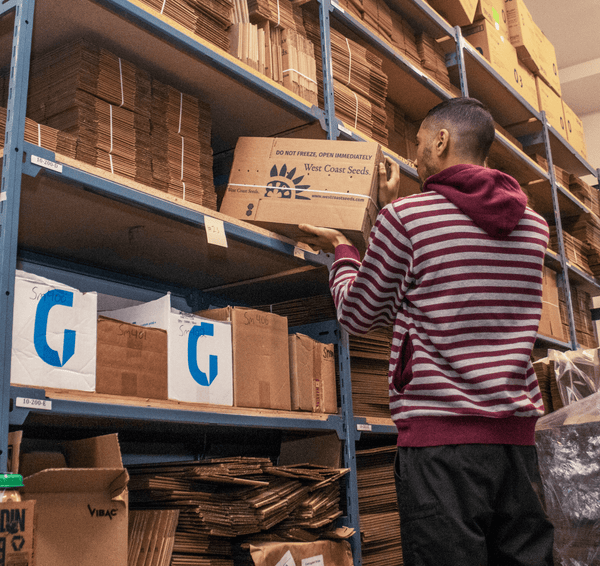
West Coast Seeds ships anywhere in North America. However, we are not able to ship garlic, potatoes, asparagus crowns, bulbs, onion sets, Mason bee cocoons, or nematodes outside of Canada.
For every order online, we donate a pack of seeds to gardens and communities worldwide through our Seeds of Growth program, supporting sustainable growth and local food systems.
*This product cannot be shipped to the USA.
Here is a pumpkin with at least four uses. The thick flesh of the plump fruits is creamy and sweet for pies and other fall recipes. Naked Bear pumpkin seeds are born bare naked — hull-less for snacking and baking. The shallow ridges of the dark orange, bowling-ball-sized fruits make them perfect for fall decorating and their thick stems make them perfect for Jack o' lanterns. The fruits are slightly flattened, up to 1.8kg (4 lb) each on relatively compact, medium sized vines. Plants boast an intermediate resistance to powdery mildew. Give pumpkin plants lots of fertile soil enriched with organic matter and keep the soil evenly damp. Avoid overhead watering.
We'll notify you when this product is back in stock.
Latin
Latin
Cucurbita maxima & C. pepo.
Family: Cucurbitaceae
Difficulty
Difficulty
Easy, but these big plants require lots of room.
Season & Zone
Season & Zone
Season: Warm season
Exposure: Full sun
Timing
Timing
Direct sow or transplant in late spring once the soil is warm. For transplants, start seeds indoors during the first two weeks of May. Optimal soil temperature: 25-35°C (77-95°F). Seeds should germinate in 7-14 days.
Starting
Starting
Sow seeds 2cm (1″) deep. Sow 3 seeds in each spot you want a plant to grow and thin to the strongest plant. Space plants at a minimum of 90-120cm (36-48″) apart in rows 120-180cm (48-72″) apart. If starting transplants indoors, consider using the 12-cell plug inserts.
Growing
Growing
Ideal pH: 6.0-6.8. These big plants need lots of food. Choose a sunny spot with fertile, well-draining soil. Dig in a generous quantity of finished compost and/or composted manure. Dig in 1 cup of complete organic fertilizer under each plant. All pumpkins grow male flowers first, then the female flowers are produced. The female flowers have tiny fruits at the base of the petals and require pollination by bees, mostly. Incomplete pollination is common at the beginning of the season, and results in small fruits that are misshapen at the flower end. Discard these damaged fruits before they rot.
For the largest pumpkins, feed weekly throughout the growing season with fish or kelp based fertilizer. Keep the huge plants well watered, particularly in hot weather. Always water the soil, and avoid any form of overhead watering other than rain. Fruit will grow larger if you keep only one fruit per vine. As the fruit develops, try to gently encourage it to grow at a 90° angle to the vine itself. The largest pumpkin varieties will grow on their sides.
Harvest
Harvest
Like other winter squash, pumpkins are mature when they have coloured up well and their stems are crisp. For the best sugar content, cut the stem about 4cm (2″) or so from the body of the fruit. If the weather is dry, allow the pumpkins to cure in the field for 10 days, or in a warm room for 4-5 days. Bring pumpkins in under cover before rain.
Seed Info
Seed Info
In optimal conditions at least 80% of seeds will germinate. Usual seed life: 2 years. Per 100′ row: 60 seeds, per acre: 6.5M seeds.
Diseases & Pests
Diseases & Pests
Powdery Mildew: An airborne fungal disease that causes white spots on the leaves at the end of the season. Several home-sprays are said to be somewhat effective. Spray any of the following at 7-10 day intervals. 1tsp baking soda and 1 quart of water with a squirt of dish soap, or 1 part milk to 9 parts of water. You can add a little kelp based fertilizer to the mix. Resistant varieties get the mildew just a few days later than the other varieties.
West Coast Seeds is a family-owned company that embraces an organic lifestyle. A group of imagination catalysts and passionate educators, dedicated to producing products and services that better the environment. As part of our mission to repair the earth, we aim to inspire and empower people to take responsibility for the state of the planet. For us, organic is about much more than saying no to chemicals, it is about saying yes to building a healthy soil for the future.
For over 35 years, we have upheld our strong reputation as a leading seed supplier, seeking out the highest quality untreated seeds for organic growing and putting them through rigorous independent testing. We built our company on the exchange of generational wisdom in a masterclass community of newbies and masters alike. Our world may have changed, but our commitment to our people, our customers, and our planet has not.
We’re a values-based business that has blossomed into a lifestyle ethos, with products that support seeders, feeders, keepers, and the tiniest of creepers. Our mission? To mobilize the next generation of gardeners with products that nourish soil and grow vigorous, sustainable gardens. We believe all plants should be grown without the use of chemicals, and that the seeds we supply are an important component of regenerative gardening.
We don’t just offer seeds, we offer experience, insight, and understanding. From timeless garden wisdom to new tech know-how, this is learning on the job: knowledge gleaned not from the pages of a book but from burying our fingers in the soil. We test, experiment, observe and adapt, never happier than when we get to share what we’ve learned with others.
Gardens don’t just grow seeds. They grow minds and imaginations, people and communities. Our vision encompasses both the micro and the macro. We eat locally, protect pollinators, teach people to grow from seed, and support regional biodiversity. We think big but act small and deliver unexpected impact — always with community and purpose.
At West Coast Seeds we believe in the power of small and that little can be large. Like the tiniest seed germinates to evoke incremental change with massive potential, so to can our community of gardeners and growers together. Gardeners are the earth’s stewards, planting seeds of creative declaration. The soil provides the canvas, we provide the seeds.
Direct sow or transplant in late spring when soil warms up. For transplants, start seeds indoors 4-6 weeks after the last frost date. Try to get the plants into the ground no later than the summer solstice. Optimal soil temperature for germination: 25-35°C (68-95°F). Seeds should sprout in 7-14 days.
Sow seeds 2cm (1″) deep. Sow 3 seeds in each spot you want a plant to grow and thin to the strongest plant. Space plants at a minimum of 90-120cm (36-48″) apart in rows 120-180cm (48-72″) apart. If starting transplants indoors, consider using the 12-cell plug inserts.
Ideal pH: 6.0-6.8.
These big plants need lots of food. Choose a sunny spot with fertile, well-draining soil. Dig in a generous quantity of finished compost and/or composted manure. Dig in 1 cup of a general well-balanced organic fertilizer under each plant. All pumpkins grow male flowers first, then the female flowers are produced. The female flowers have tiny fruits at the base of the petals and require pollination by bees, mostly. Incomplete pollination is common at the beginning of the season, and results in small fruits that are misshapen at the flower end. Discard these damaged fruits before they rot.
For the largest pumpkins, feed weekly throughout the growing season with fish or kelp based fertilizer. Keep the huge plants well watered, particularly in hot weather. Always water the soil, and avoid any form of overhead watering other than rain. Fruit will grow larger if you keep only one fruit per vine. As the fruit develops, try to gently encourage it to grow at a 90° angle to the vine itself. The largest pumpkin varieties will grow on their sides.
In optimal conditions at least 80% of seeds will germinate. Usual seed life: 2 years. Per 100′ row: 60 seeds, per acre: 6.5M seeds.
Like other winter squash, pumpkins are mature when they have coloured up well and their stems are crisp. For the best sugar content, cut the stem about 4cm (2″) or so from the body of the fruit. If the weather is dry, allow the pumpkins to cure in the field for 10 days, or in a warm room for 4-5 days. Bring pumpkins in under cover before rain.