









It's not a typo, and we're not talking about seed potatoes. This is actually how to grow potatoes from seed. Potatoes, just like other vegetables, flower in the summer. If the flowers are pollinated, small fruits can form that look like tiny tomatoes. If the fruits mature, they can develop seeds. In most cases, the genetics of potato seeds are not predictable, and may produce undesirable traits. In this case, the seeds are hybrids that have been carefully produced by plant breeders, so they will produce consistent results.
Latin
Solanum tuberosum
Family: Solanaceae
Difficulty
Moderately easy
Season & Zone
Season: Cool season
Exposure: Full-sun
Timing
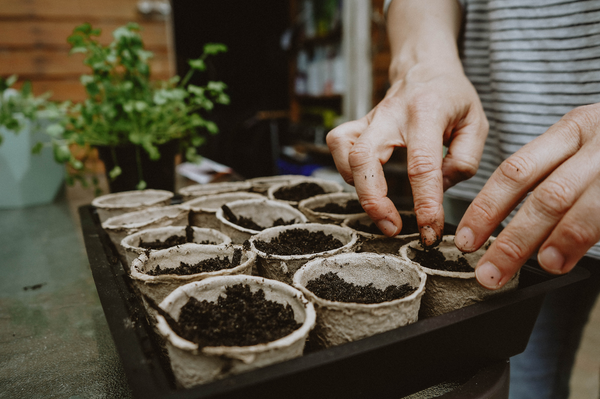
Six weeks before date of last frost/desired transplant date sow seed ¼” deep in plug trays or maximum 2” pots with nutrient-free soil media (pH 5–7). Larger containers take longer to fill with roots and plants can start to produce tubers before transplant, which is not desirable. Maintain constant 21°C (70°F) without bottom heat, water so media remains evenly moist, and provide sufficient light for 12 hour days. Once all seeds have germinated (in 10–14 days), the plants can be moved to a cooler (above freezing) area and foliar or liquid fertilizer applied. Gradually harden off over one week before transplant.
Transplanting
Plants are ready for transplant when they are ~5cm (~2”) tall. If transplant is delayed, consider potting up to a larger size to avoid stressing the plants and beginning tuber formation. Plant in a hill, flat top bed or trench (whatever is common for potatoes in your area) so only the top whorl of leaves ~2.5cm (~1”) is above the soil surface. If planning to harvest small potatoes, use 20cm (8”) within and between rows, for larger potatoes 30cm (12”) within and 75cm (30”) between rows as a starting point and adjust based on experience.
Growing
Treat like regular potatoes grown from tubers. Nutrient uptake increases steadily as tubers form and enlarge. Look to foliar symptoms for fertility issues, nitrogen and potassium are important macro-nutrients and can be added, along with other fertilizer, during hilling as needed. Water in well to establish transplants and maintain soil moisture throughout the season. The soil surface should dry between watering, but moisture should be maintained in the soil profile.
Hilling
When plants are 10-15cm (4–6”) tall soil can be hilled up around the base of the plant to cover the bottom 2/3. Hilling can be repeated 2–3 times as needed to keep down weeds and cover tubers.
Harvest
Potatoes should be ready for harvest 70 – 120 days after transplant, depending on planting density, environment, and size desired. If potatoes are to be eaten fresh, whole plants can be dug and tubers removed. For long term storage the plants should be cut to the ground 10 days before digging and tubers stored in a cool 5°C (40°F), dark place with high humidity after harvest.
Seed Info
In optimal conditions, at least 75% of the seeds will germinate. Usual seed life: 3 years. Per 100′ row: 200 seeds, per acre: 8.8M seeds.
Diseases & Pests
Protect from cabbage moths and other insect pests with floating row cover. Prevent disease with a strict 4-year crop rotation, avoiding planting Brassicas in the same spot more than once every four years.
Companion Planting
A worthy companion for beets, Brassicas, cucumbers, and onions. Avoid planting near peppers, pole beans, strawberries, and tomatoes.