










Tall Fescue

SKUS: LS800A, LS800B, LS800C, LS800D, LS800E, LS800S

Festuca arundinacea. Turf type. Tall Fescue stands up to traffic, drought, cold, shade, pets, and mowing. It is far tougher than conventional... Read More

Tall Fescue has a rating of 4.7 stars based on 43 reviews.
Click here for more options
*Please note, this product cannot be shipped to the USA.
See our FAQs for more info.
Shipping & Returns

West Coast Seeds ships anywhere in North America. However, we are not able to ship garlic, potatoes, asparagus crowns, bulbs, onion sets, Mason bee cocoons, or nematodes outside of Canada. We regret, we cannot accept returns or damages for orders outside of Canada. The minimum shipping charge to the US is $9.99.

Seeds of Growth

For every order online, we donate a pack of seeds to gardens and communities worldwide through our Seeds of Growth program, supporting sustainable growth and local food systems.

Tall Fescue, Turf Type

Product Details

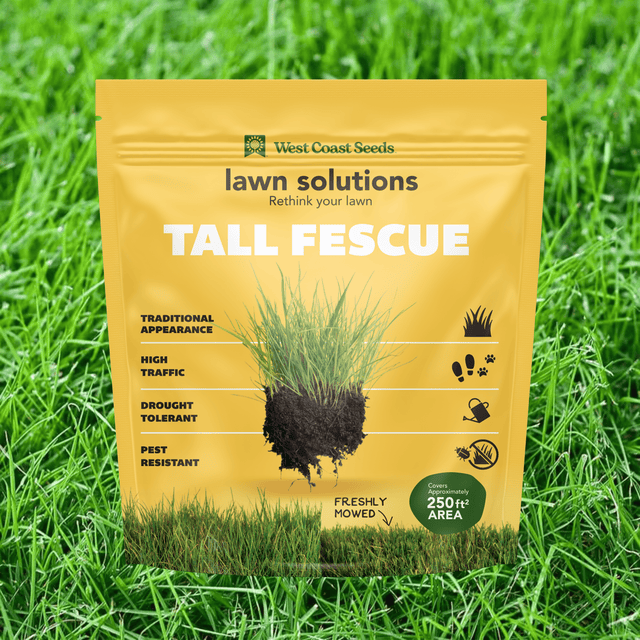
Festuca arundinacea. Turf type. Tall Fescue stands up to traffic, drought, cold, shade, pets, and mowing. It is far tougher than conventional lawn grasses like Kentucky blue grass, but it still makes a lush green lawn. It is commonly used by municipalities for planting recreation fields and school grounds. This fescue is a tough perennial. Officially, it is hardy to Zone 4, but a sudden onset of very cold weather can interfere with its dormancy, causing winterkill. Sow in the spring or fall (fall is recommended) at a depth of 5-10mm (¼-½”). Because this product does not produce thatch, it is not attractive to the chafer beetle. Fescue can be mixed with wildflower blends or Micro-Clover to cover in an area densely and quickly. It still requires mowing approximately every two weeks in the growing season. Use Tall Fescue to overseed existing lawn or seed a new area, with no turf present. Seeding rates are included on packaging.

Sow Rate: 3.6kg (8 lbs) per 1,000 square feet

Fescue is also a major component of our Chafer Beetle Resistant Lawn Blend.

Quick Facts:

    • Drought resistant
    • Grows in part shade
    • Stands up to pets
    • Hardy to Zone 4
    • Tougher than grass

We'll notify you when this product is back in stock.


Tall Fescue

We don't share your information with others.

Your notification has been registered.  Click to close!

All About Tall Fescue

Season & Zone

Season & Zone
Exposure: Full sun to partial shade
Zone: Tall Fescue is hardy to Zone 4.

Timing

Timing
The best time to plant fescue seeds is when the soil temperature is between 10-18°C (50-65ºF) or daytime temperatures are in the 15-23°C (60-75ºF) range. When daytime temperatures are above 32°C (90ºF) or below 10°C (50ºF) the seeds will go dormant. It is best not to plant fescue seeds in the summer months.

Starting

Use Tall Fescue to seed bare soil, with no turf present, at 3.6kg (8 lb) of seed per 1,000 square feet. Aim to sow at a depth of 5-10mm (¼-½”). Because lawn spaces tend to be large, we recommend erring on the side of caution. It’s a good idea to withhold 15-20% of seeds for filling in any bald areas later. All new plantings should be kept damp.

Growing

Growing
This fescue is a tough perennial. Officially, it is hardy to Zone 4, but a sudden onset of very cold weather can interfere with its dormancy, causing winter-kill.  Because this product does not produce thatch, it is not attractive to the chafer beetle.

How To Grow Tall Fescue

Growing

This blend of Micro-clover and Tall Fescue seeds takes a two-pronged approach at defeating the chafer beetle. This blend is meant for use with new, bare topsoil, and not for over-seeding existing lawns. Keep the newly seeded area well-watered as the seedlings take root. Onceestablished, this lawn will require regular maintenance, but it will stay greener for longer in the summer, and it will stand up to foot (and pet) traffic in areas of full sun to partial shade. Clover may go dormant over winter, and may appear to die back, so the fescue in this blend will keep lawns looking healthy and vibrant. This blendcontains95% Tall Fescue and 5% Micro-clover.

Starting

Spread the seed on bare soil, with no turf present, at a rate of 3.6kg (8 lb) per 1000 square feet. Seeding over existing thatch is rarely successful. Because lawn spaces tend to be large, we recommend erring on the side of caution.It’sa good ideato withhold 15-20% of seeds for filling in any bald areas later. All new plantings should be kept damp until the plants areestablished.

Timing

Sow in the period two weeks before, to eight weeks after, the last frost date. Or, in areas with mild winters, sow in early autumn, approximately eight weeks before the first frost date. 

Customer Reviews & Questions